
Project Overview
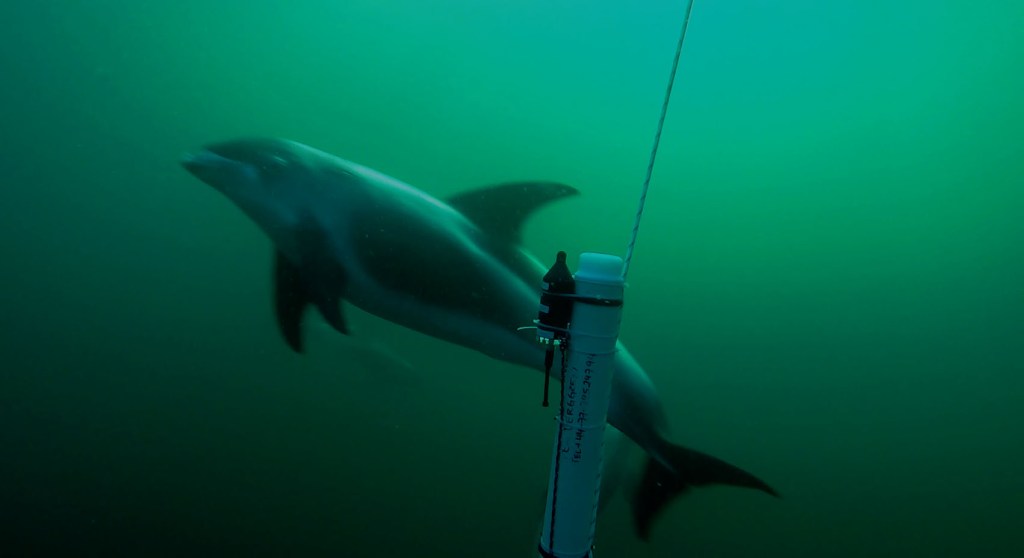
An immersive multichannel installation featuring the sounds and imagery of White Beaked Dolphin in the North Sea with themes of ecosystem health, bio-indicator species, underwater sound and environmental awareness.
White Beaked Dolphin are important as an indicator species for the health of the ecosystem they live in. Polluted ecosystems result in these Dolphin manifesting larger surface areas on their bodies of Tattoo Skin Condition a form of Dolphin pox.
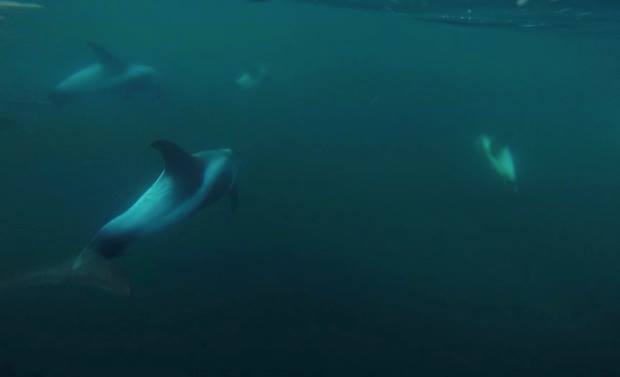
Audio recordings of white beaked dolphin pods in the North Sea were made using hydrophones. Hydrophones are microphones that can record sound underwater. The White Beaked Dolphin pods were located in North Sea approximately 10 miles off the Northumberland Coast at Amble.
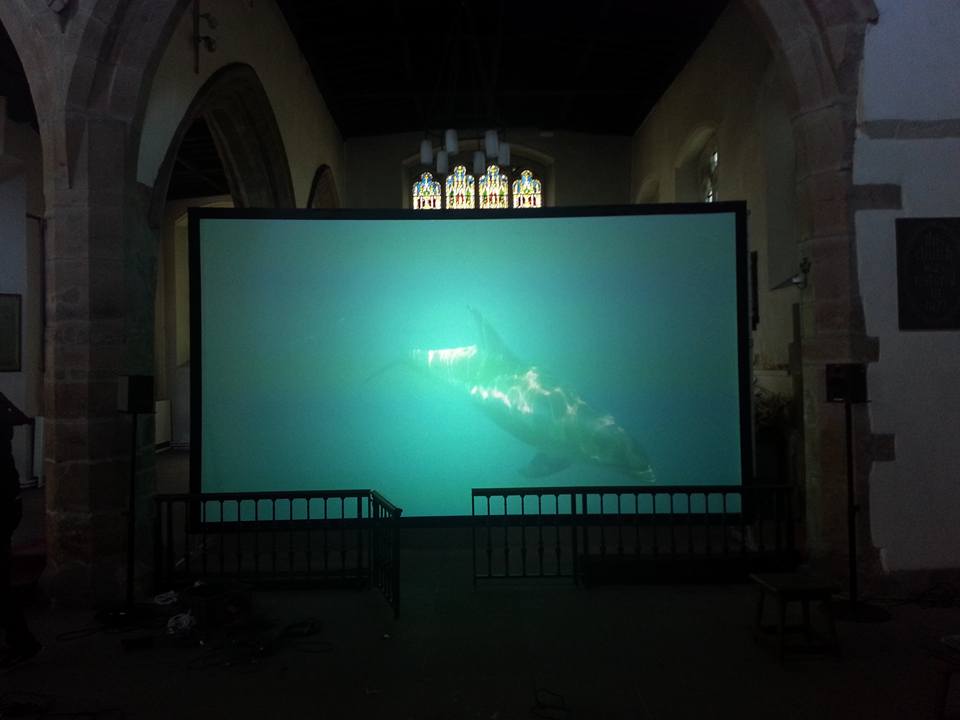
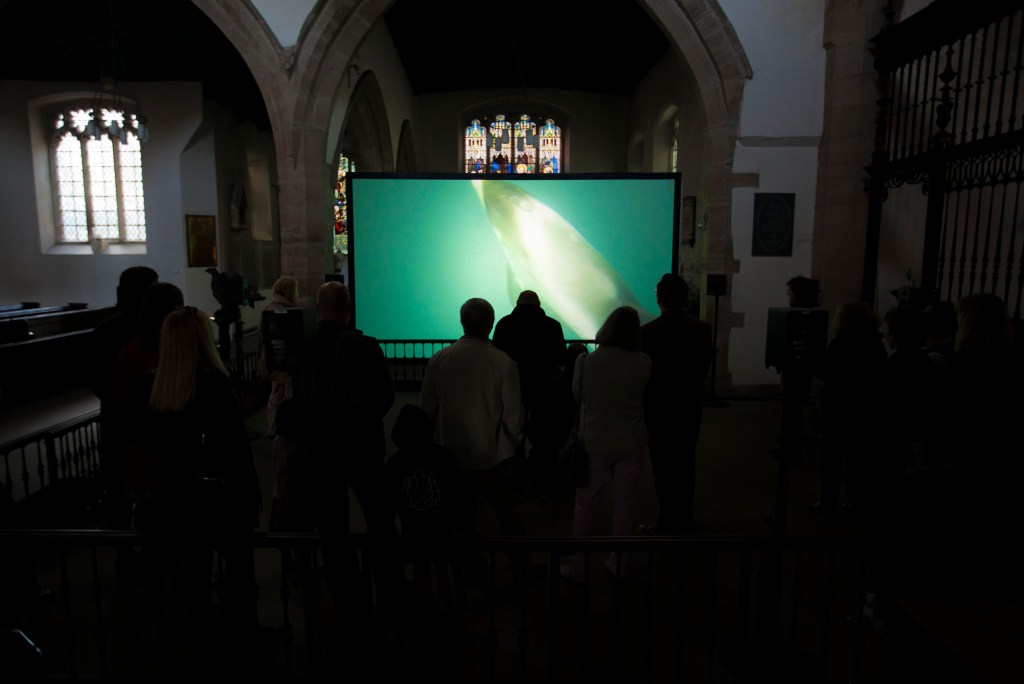
Multiple research visits were made to create a set of audio recordings and underwater video of the dolphins. This material was edited and presented as a multichannel audio work using custom software coded in MaxMSP. 8 Channels of ambisonic audio produced an immersive sound environment. The work also featured a single channel of video.
Audience Experience
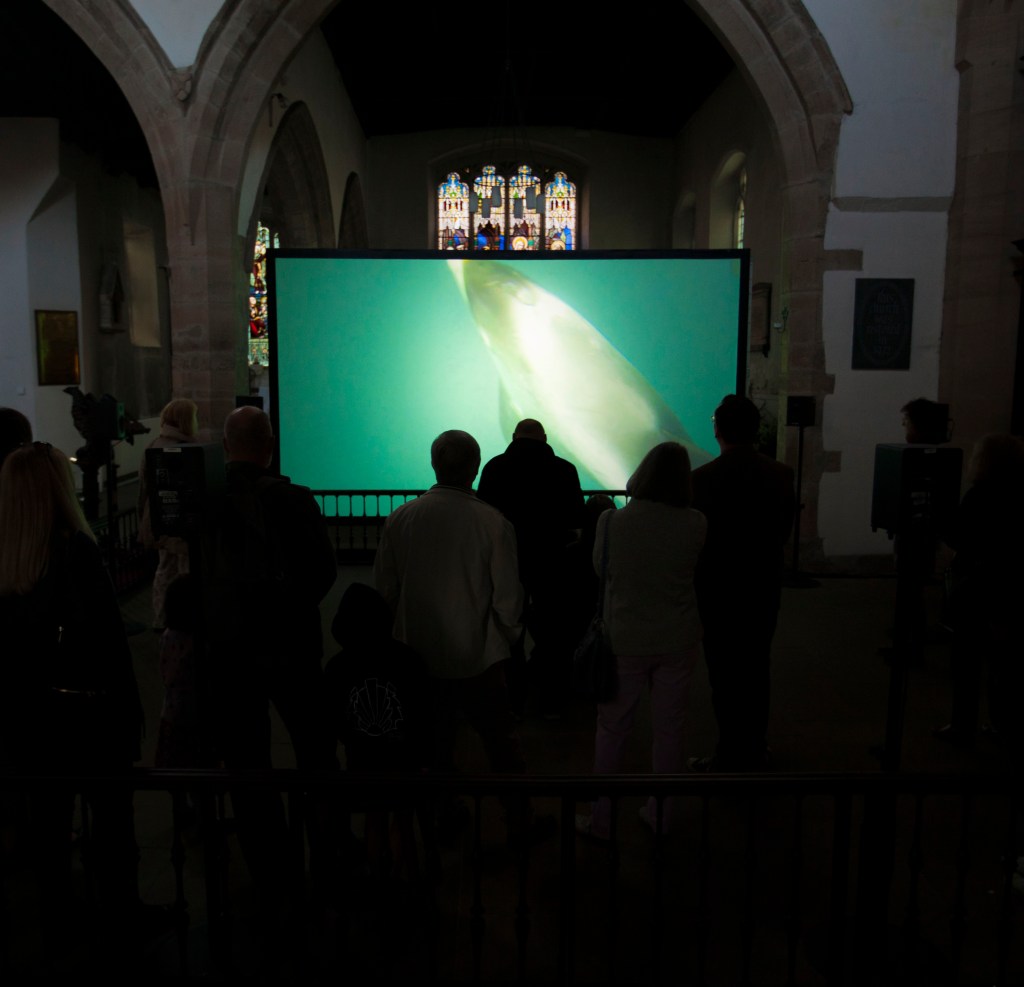
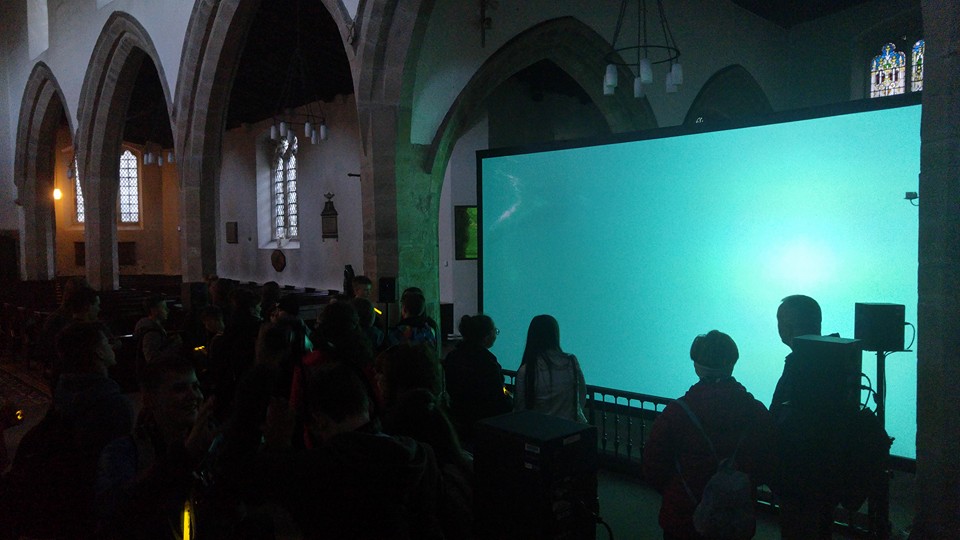
Audience members are able to experience something inaccessible and prohibitively dangerous for most people. That is being close to these creatures and hearing underwater sound, in a safe manner. 1:1 scale footage of the dolphins and unique listening experiences through the immersive audio create an emotive audience response opening them up to reflections on human impacts on the seas and the fauna living there. Audience feedback has been that this instilled a sense of mixed affect, potentially a conflict between wonder and concern in audience members. Wonder at the beauty and majesty of nature and simultaneously concern that this is being gradually eroded and lost – out impact on the planet is harmful to other creatures we share it with. Comparing the world populations of white-beaked dolphins estimated to be at least over 100,000 with that of humans 8.1 billion (8,124,518,723) [3] its impossible not to imagine one groups activity negatively impact the other.
Collaborators
Dr. Ben Burville, Marine Wild Live Assesor
Prof. Per Berggren, Marine Science, Newcastle University
Exhibition
The work was presented at:
“Lines, Loops, and Layers” exhibition at Culture Lab, Newcastle-upon-Tyne
Lates Shows, St. John The Baptist Church, Newcastle-upon-Tyne



Pelagics – Detailed Description
Introduction
This project explored bioindicator species and ecosystem health with a focus on White Beaked Dolphin (Lagenorhynchus albirostris). Ecosystem health indicators are measures which help us to understand where action should be taken to restore ecosystem health and associated benefits. Condition indicators tell us whether an ecosystem is in a good state
White beaked dolphin are prone to Tattoo Skin Disease TSD, a form of dolphin pox that leaves a permanent mark on their skin. The “Tattoo-like lesions are irregular hyperpigmented marks with a dark outline evoking the stippled pattern” [1]
This pattern is unique to each dolphin and can be used to identify them. It is also used as a condition indicator for ocean health and monitored by marine scientists. This means that these marine mammals are a bio-indicator species revealing the health of their environment. If the health of the ecosystem declines, for example, through an increase in pollution levels, then the dolphins manifest a greater surface area coverage of TSD on their skin. The higher the level of pollutants the less effective their immune systems are at dealing with this environmental pressure. Other environmental pressures are also related to higher levels of TSD, for example, human produced sound in the oceans (sound of anthropogenic origin) creates a further environmental stress on White Beaked Dolphin and can result in higher levels of TSD.
Underwater listening was used as a way to enagage with ecosystem health and also to experience White Beaked Dolphin. This was carried out using hydrophones and field recorders to capture the sounds of these animals and their environment.
The main aim of the project was to explore these issues and present a multichannel artwork that instilled a sense of mixed affect, potentially a conflict between wonder and concern in audience members.
The Power of Dolphin Imagery
Imagery of dolphins has long captivated human interest with a corresponding strong postive emotional affect created by them. The dolphin is a symbol of the magic of nature and dolphin imagery holds this power. However, over use has weakened its impact. We have all seen the ubiquitous dolphin tattoo – this symbol is imbedded in the psyche of our western cultural milieu. This project sought to work with dolphin imagery but to attempt to present this in an uncliched way.
Underwater Sound
Water is a different medium to air so sound travels faster and further underwater. (1500 meters/sec) in water and (about 340 meters/sec) in air. This makes underwater listening a really interesting thing to do. It also means that sound produced a long way off can still be problematic, for example the sounds from underwater drilling carried out by humans in one location may travel far enough to cause issues for white beaked dolphin in another distant location. Listening is a way to experience the sounds dolphins make but can also be used to listen to the health of an ecosystem.
Dolphin Sounds
Each dolphin has a slightly different tonal range to its clicks and whistles, allowing other dolphins in the group to understand which one is communicating at the time.
The clicks and whistles are able to communicate a wide range of ideas: that a dolphin wants to mate, that there is danger, and that it has found food, for example.
Affect
The idea was to explore the generation of mixed affect in audiences whereby multiple conflicting emotions may be experienced. For example, audiences might experience wonder at being able to see and hear white beaked dolphins up close (so positive emotions) but simultaneously experience concern (negative emotions) around the conditions of degraded environments.
Methods
Discussions with Prof. Per Berggren, Marine Science, Newcastle University and Dr. Ben Burville, Marine Wild Live Assesor revealed concerns for White Beaked Dolphin pods in the North Sea. The White Beaked Dolphin pods were located approximately 10 miles off the Northumberland Coast from Amble.
Audio recordings of white beaked dolphin pods in the North Sea were made using hydrophones. Hydrophones are microphones that can record sound underwater.
Multiple research visits were made to create a set of audio recordings and underwater video of the dolphins. This material was edited and presented as a multichannel audio work using custom software coded in MaxMSP. 8 Channels of ambisonic audio produced an immersive sound environment. The work also featured a single channel of video.
Custom Software
To instill a sense of wonder in audience members an immersive sound environment was created using an array of 8 Genelec speakers arranged in a circular layout. These were driven by custom software created in MaxMSP, this software featured automated mixing and the distribution of up to 10 layers of audio to the 8 speaker array. The software used Ambisonics to distribute the channels of audio and create the resulting field of sound.
Large Scale Projection
It was hoped that audience members would reflect on ecosystem health and come away with a modified perspective on the connections between human activity. To this end a large scale projection was deployed so that dolphins seen on the projection screen were roughly shown at a 1:1 scale. This sizing of humans to dolphins can be seen in the image below (image source [2]:
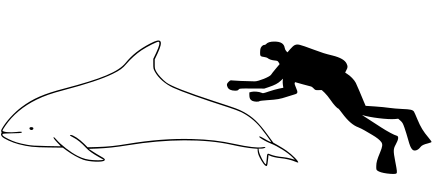
The idea for this came from wanting to show something up close that few people get to see. Project collaborator Ben Burville, has a special licence allowing him entry to the water to swim with these dolphins so that he can photograph and record their health, this can only be done up close. This type of skin diving (diving without scuba equipment) in the North Sea is a high risk activity. I wanted to make the inaccessible accessible and try to create something as close to this experience as possible.
References
[1] Bertulli, Chiara & Cecchetti, Arianna & Van Bressem, Marie-Francoise & Van Waerebeek, Koen. (2012). Skin disorders in common minke whales and white-beaked dolphins off Iceland, a photographic assessment. Journal of Marine Animals and Their Ecology. 5. 29-40.
[3] The United Nations Population Division of the Department of Economic and Social Affairs every two years calculates, updates, and publishes estimates of total population in its World Population Prospects series. These population estimates and projections provide the standard and consistent set of population figures that are used throughout the United Nations system. Figure quoted from:
https://www.worldometers.info/world-population/#ref-1
 Ben_Freeth
